

Battery Energy Storage Systems, BESS, sites enable energy from renewables, like solar and wind, to be stored and then released when the power is needed most. Whilst the main function is to soak up surplus clean electricity and discharge it back when needed, the plant can also operate in several different modes to provide grid stability services, for example helping to manage voltage and frequency imbalances as renewable generation dips up and down.
The Green Blog — What are BESS systems?
Grenergy — April 24, 2026
Battery Energy Storage Systems (BESS) have gone from being an emerging technology to consolidating themselves as a pillar of the global electricity system in just a few years. According to Rystad Energy, the installed capacity of BESS batteries exceeded 250 GW globally at the end of 2025, reflecting accelerated growth driven by the expansion and growing prominence of renewable energies.
A BESS system makes it possible to store energy, for example, generated in a photovoltaic solar plant, at times of peak production and use it later, when demand requires it. Thus, energy storage introduces a key capability into the electricity system: the possibility of decoupling energy generation and consumption over time.
In addition, by storing energy when it is abundant and releasing it when it is needed most, battery storage systems turn that advantage into an economic asset, offering clean, manageable and competitive energy, and maximizing the value of each MWh in a market increasingly oriented towards efficiency, energy independence and price.
In this context, the concept of photovoltaic storage becomes relevant as a key infrastructure to manage large volumes of renewable generation.
Key Benefits of BESS in the Electric System
The ability to store and manage energy over time translates into structural benefits for the operation of the electricity system:
- Optimize energy use efficiently
- Increasing the energy independence of electricity systems
- Reduce price volatility
- Act as a backup system in the event of incidents
- Improve network stability and quality
- Facilitating continuously available clean energy (24/7)
In short, BESS turns clean energy into a manageable supply “on demand”, predictable and aligned with the needs of the system, available continuously.
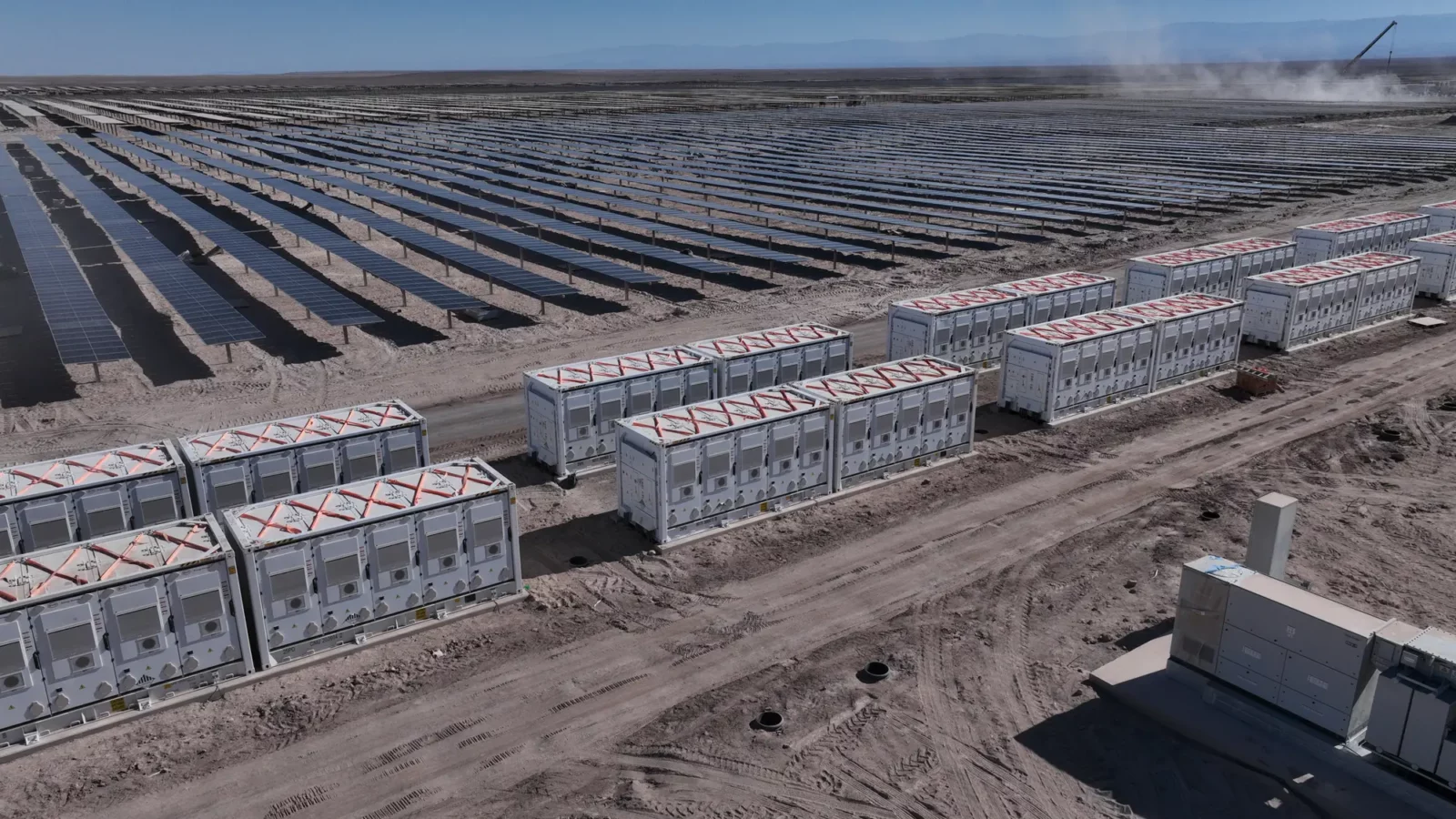
Solar energy storage system in the Atacama Desert (Chile).
How a BESS Works Inside
Although from the outside it may be perceived as an industrial container, a BESS is a technological infrastructure that integrates electrochemical, electronic and digital components. In a simplified way, its operating logic is comparable to the battery of an electric vehicle.
These systems are structured into several key components, each with a specific function within the operation of the system:

- Racks and battery modules. They securely hold and organize the modules, ensuring alignment, easy installation and maintenance, and facilitating the thermal management of the system.
- Batteries. BESS systems can integrate different technologies, such as lithium-ion, flow batteries or sodium-sulfur. They store energy in a compact and highly efficient format. Known for their high energy density, they allow energy to be stored and released quickly on demand, making them ideal for supporting grid stability.
- Battery Management System (BMS). Monitor and control the status of each cell, ensuring safe operation, preventing overheating, and managing load levels. It is essential to maximize system life and maintain optimal performance.
- Power Conversion System (PCS). It converts electricity between direct current (DC) and alternating current (AC), allowing bidirectional interaction with the power grid.
- Energy Management System (EMS). Coordinates the overall operation of the BESS, optimizing when to store or release energy based on demand, prices, or grid conditions.
- HVAC System. Heating, ventilation and air conditioning system that maintains optimal thermal conditions for the operation of batteries and other sensitive equipment.
- Fire Protection System. Detects and mitigates thermal or electrical risks, activating containment mechanisms to ensure system safety.
- Transformers and auxiliary electrical systems. They adapt the energy for integration into the grid and ensure the correct operation of the system.
An essential piece of today’s energy system
As power grids evolve towards a model with high penetration of solar and other renewables, the ability of BESS systems to react in milliseconds puts them at the center of the current and future power system.
Due to its versatility, battery storage has established itself as the “Swiss Army knife” of the electricity system: a single infrastructure capable of offering multiple essential services simultaneously.
From the management of renewable surpluses to grid stabilization, from energy arbitrage to system backup, energy storage is positioned as a key enabler of a cleaner, more efficient, competitive, secure and truly ready energy model to operate 24/7.
In fact, the deployment of storage has become one of the great levers of the energy transition. The International Energy Agency (IEA) places this technology at the centre of the change in model and raises the need to multiply its capacity globally by six to meet climate and energy objectives.
Grenergy: A Preview in Storage
In line with the evolution and needs of the sector, Grenergy has advanced from a model focused on solar energy generation to an energy management model, where the combination of photovoltaic energy and battery storage maximizes the value of each MWh produced.
This positioning responds to an anticipated vision of the market, identifying the role of the photovoltaic warehouse as a catalyst for the electricity system and acting as an early mover in its development.
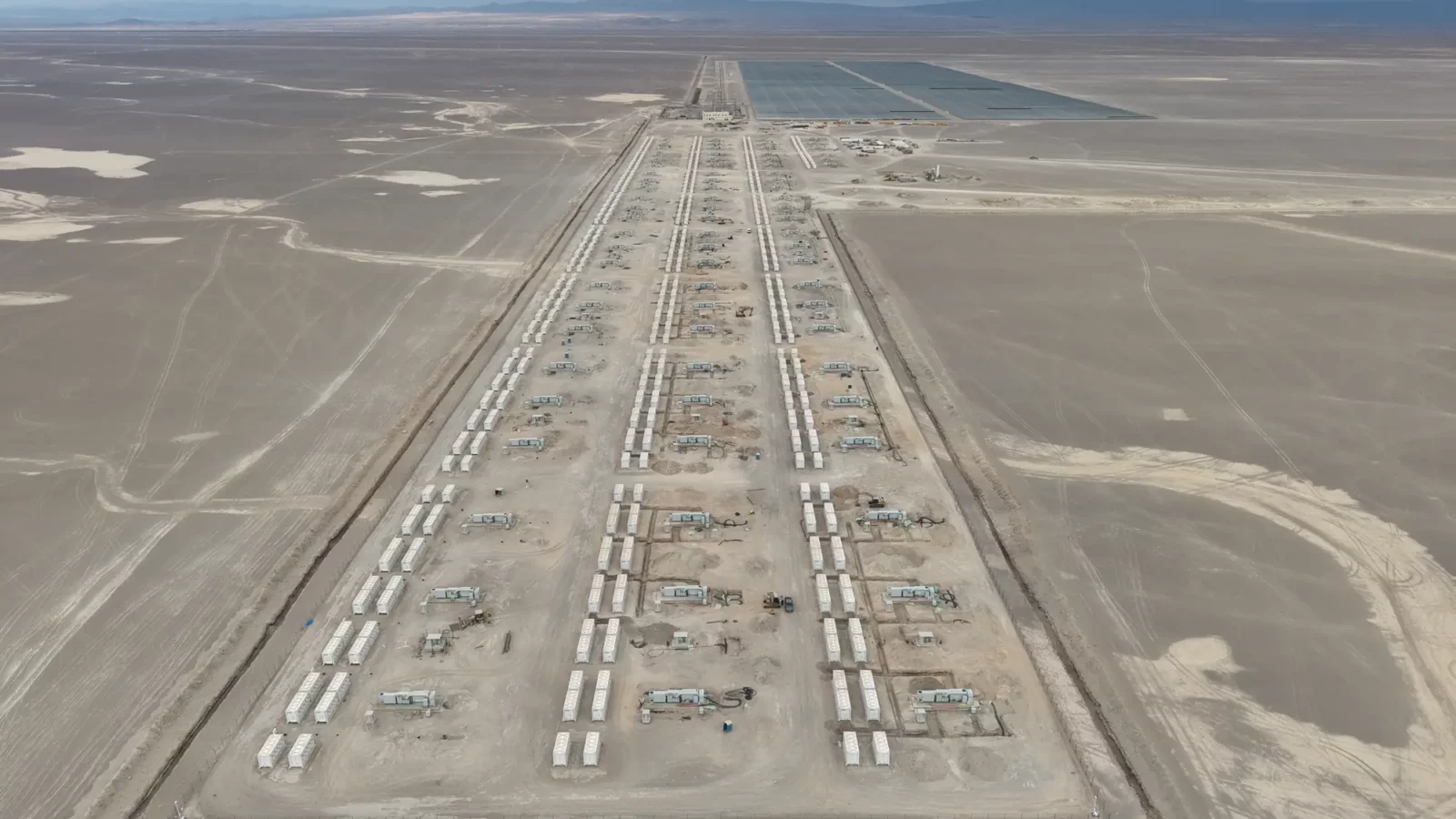
The strategic change is consolidated in 2022, when Grenergy promotes projects such as Oasis de Atacama, in Chile, one of the largest battery storage systems in the world, with a solar energy storage capacity of 11 GWh.
Since then, the company has accelerated the deployment of BESS systems, exceeding 72 GWh in its portfolio, and has made progress in new energy supply models, including 24/7 contracts supported by storage.
ELENA – PHASE VI OASIS DE ATACAMA
Frequently Asked Questions
It allows excess production to be stored and used when generation is lower, avoiding losses.
It corresponds to the Battery Energy Storage System, a battery-based energy storage system.
Yes, as it optimises energy consumption and reduces costs in the medium and long term.
They are used in solar plants, power grids, and industrial sectors with high energy demand.
Glossary
- BESS: Battery Energy Storage System.
- BMS: Battery Management System, a system that controls the status of batteries.
- EMS: Energy Management System, a system responsible for managing the flow of energy.
More The Green Blog


